Why Feedback in Early Childhood Education Is the Conversation Most Leaders Avoid: And What to Do About It
The quick check-in that boosts a team member’s confidence. The courageous discussion that lifts standards across the room. The honest, caring feedback that helps an educator grow into their role.
These conversations don’t just happen, they have to be cultivated, led, and practised. And yet, in early childhood services across Australia, feedback is often the conversation that gets postponed, softened, or saved for the annual performance review.
When that happens, the cost is real. Team culture erodes quietly. Issues that could have been resolved in a five-minute conversation become entrenched problems. And the educators who most needed support don’t get it, not because no one cared, but because the conversation felt too hard to have.
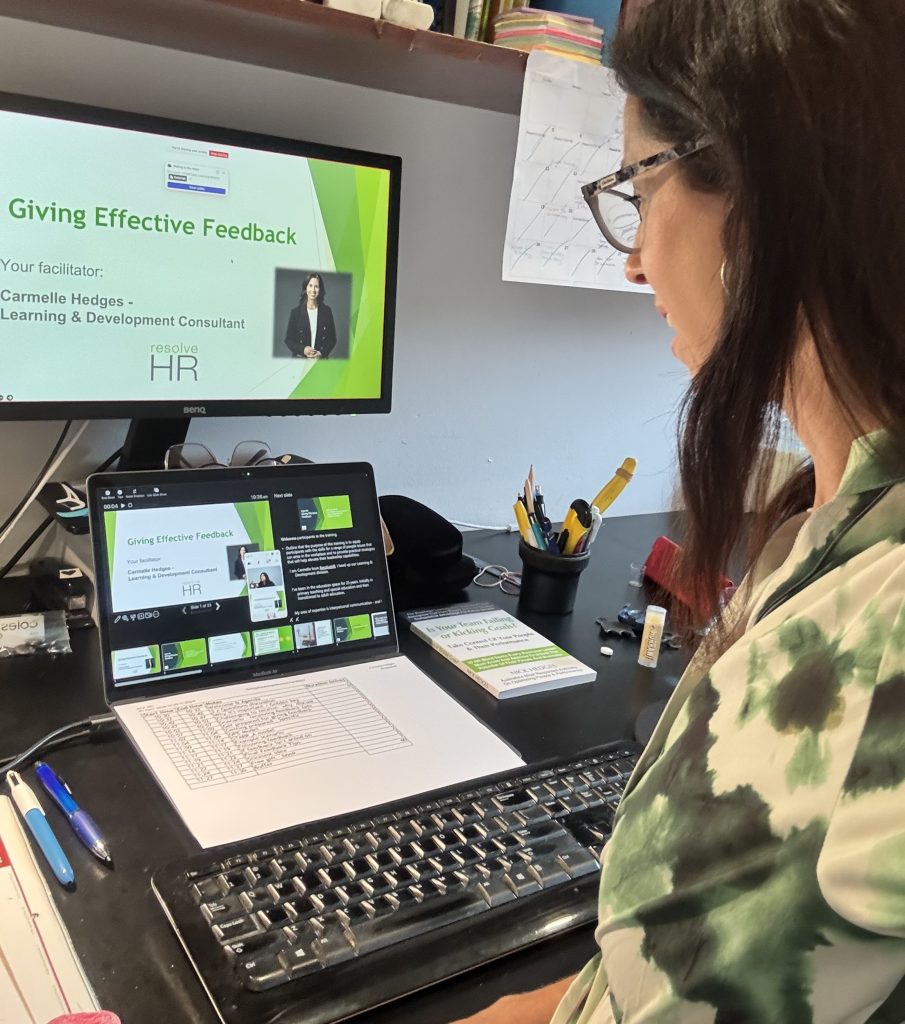
That’s exactly why ACA Victoria, in partnership with trusted HR and Workplace Relations specialists ResolveHR, hosted a free webinar specifically designed for ECEC professionals: Feedback That Works: Practical Strategies for Early Learning Leaders.
If you missed the live session, the recording is available. Fill in the form below to get access.
Why Is Feedback in Early Childhood Education So Difficult?
Before we look at solutions, it’s worth understanding the problem honestly.
Feedback in early childhood education settings is uniquely complex. Unlike many corporate environments, early learning services are built on deeply relational work. Educators care about each other. Nominated Supervisors and Approved Providers often promote from within, which means the person you’re giving feedback to today was your peer last year, or is someone you genuinely like and want to protect.
That relational warmth is one of the sector’s greatest strengths. But it can also make direct, honest feedback feel like a threat to the relationship.
As Carmelle Hedges, Learning and Development Consultant at ResolveHR, put it in the webinar:“The standard we walk past is the standard we accept.”
When feedback gets avoided, it doesn’t disappear. It shows up as:
- Team members who don’t understand what’s expected of them
- A culture where high performers quietly become frustrated because low performance goes unaddressed
- Leaders who feel overwhelmed by conversations they’ve been putting off for months
- Educators who miss out on growth because no one told them what they needed to hear
The good news? Feedback is a skill. And like every skill, it can be learned, practised, and improved.
What ECEC Leaders Took Away
The session covered practical, immediately applicable strategies, no theory, no jargon. Participants walked away with:
- The STARR-A framework: a simple structure for delivering specific, evidence-based feedback
- The OPE model: keeping feedback outcome-focused and forward-looking
- How to close the loop: asking “what are you taking away from this?” to make sure feedback actually landed
- What to do when feedback doesn’t land: and how to follow up without derailing the relationship
The overwhelming feedback from participants? They left feeling confident and equipped to have conversations they’d been putting off.
Watch the Recording: Free
The live session was held on Thursday 30 April 2026, hosted by ACA Victoria in partnership with ResolveHR and delivered by Carmelle Hedges, a facilitator with over two decades of experience in leadership and team development. The recording is now available at no cost.